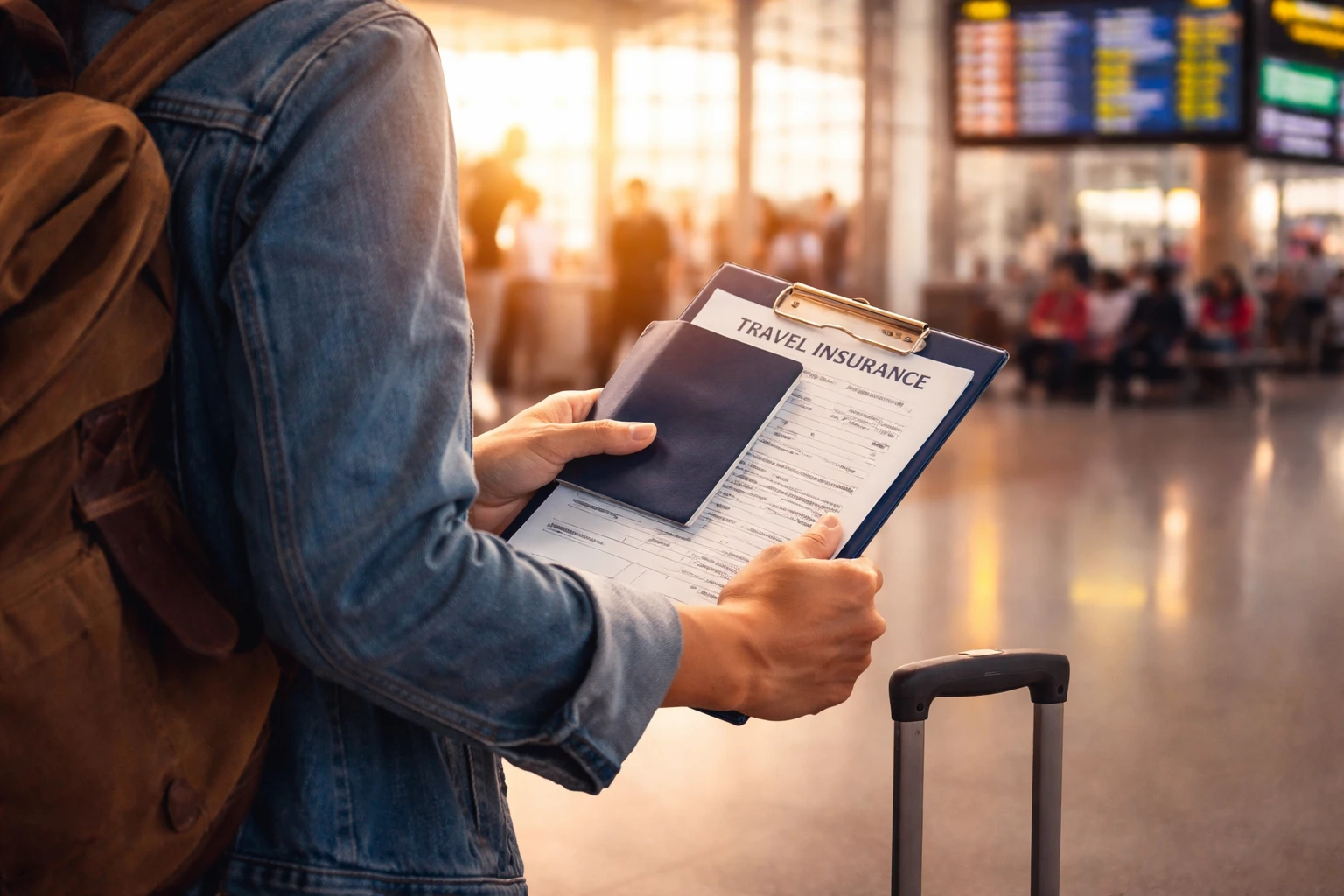
The first time something went wrong on a trip, I wasn’t thinking about travel insurance — I was standing in a foreign city, tired, confused, and trying to figure out what to do next. Like most Americans, I used to focus on flights, hotels, and itineraries. Insurance felt optional — something you buy ‘just in case’ and hope you never use.
That mindset changed after several trips abroad — including a medical situation in Southeast Asia, a canceled flight in Europe, and lost baggage during a domestic connection — none of which felt serious at first.
Understanding what travel insurance actually does — and what it doesn’t — is what finally changed how I plan every trip, although it took longer than it should have.
After years of traveling through Southeast Asia, Europe, and many U.S. states — and dealing directly with insurers, airlines, and hospitals — my view of travel insurance changed. Not all of those lessons were comfortable.
I learned about travel insurance by experiencing it firsthand—not by reading brochures or comparison charts. I learned it on the road, after dealing with hospitals, airlines, and unexpected expenses in places where I just wanted the problem to end.
What Is Travel Insurance and How Does It Work?
I used to think of travel insurance as something abstract — a policy you buy and forget. In reality, it’s a financial safety net you hope never to touch, but are deeply grateful for when things go wrong far from home.
By buying coverage before you travel, you’re shifting the financial risk of unexpected problems — medical emergencies, canceled trips, or lost baggage — away from yourself. Coverage usually includes trip cancellation, emergency medical care abroad, evacuation if things get serious, baggage issues, and delays that quietly drain money.
If one of these covered events occurs, the insurance company reimburses you for eligible expenses. The key idea is simple, but it took me years to really feel it: you’re transferring financial risk before anything has a chance to unravel.
Why Travel Insurance Is Especially Important for U.S. Travelers
Many Americans believe their health insurance will protect them overseas. In reality, most U.S. health plans provide little or no coverage outside the country. Medicare generally does not cover care abroad, and many private insurers have strict limitations.
I learned this the hard way during a trip to Thailand.
During a trip to Thailand, I developed a severe stomach infection while staying in a small coastal town. The hospital was clean and modern, but before treatment began, I was asked for my passport and a payment guarantee.
One night, medication, and basic tests quickly added up to several thousand U.S. dollars. At that moment, I realized something critical: being sick abroad is not just a medical issue — it is a financial emergency. Without travel medical insurance, you are responsible for every dollar.
What Travel Insurance Typically Covers
I underestimated this part of travel insurance for years. I assumed coverage was mostly about canceled flights or lost luggage. Only after dealing with real disruptions did I realize how many different problems a good policy is designed to handle.
Trip Cancellation and Trip Interruption
This covers prepaid, non-refundable trip costs if you must cancel before departure or cut the trip short.
On a trip to Italy, my connecting flight through another European city was canceled due to a transportation strike. The delay forced me to miss prepaid hotel nights and a scheduled tour. Travel insurance reimbursed those losses and covered the unexpected overnight stay.
Without coverage, I would have absorbed all the costs.
Emergency Medical Coverage Abroad
This is the most critical part of travel insurance. It covers hospital visits, doctor consultations, medication, and emergency treatment outside the U.S. Healthcare systems in many countries require payment before service. Insurance acts as your financial guarantee.
Emergency Medical Evacuation
This covers transportation to the nearest suitable medical facility or even back to the United States. In remote areas, evacuation can cost tens of thousands of dollars.
The U.S. Department of State strongly recommends that Americans traveling abroad carry insurance that includes medical evacuation coverage, warning that overseas medical transport can be extremely costly without proper protection.
Few travelers realize how common this need can be during hiking trips, island vacations, or rural travel.
Baggage Loss, Theft, or Delay
During a domestic trip with a tight layover, my checked luggage never made the connection. I arrived at my destination with nothing but a backpack. Insurance reimbursed clothing, toiletries, and essentials for the first two days.
It may seem minor until it happens to you.
Travel Delays and Missed Connections
Long flight delays can lead to hotel stays, meals, and rebooking costs. Travel insurance covers these expenses when delays meet the policy threshold.
Why Travel Insurance Feels Optional—Until You File a Claim
Before I ever filed my first claim, I assumed travel insurance was mostly theoretical. Something you buy, hope you never use, and quietly forget. I also believed that if something went wrong, the claim process would be so complicated it wouldn’t be worth the effort.
That assumption turned out to be wrong — but only after I went through it myself, because the most important part of any travel insurance claim turned out to be documentation. Not fine print. Not policy jargon. Proof.
When a delayed flight forced me into an unplanned overnight stay, I kept everything: boarding passes, the airline’s delay notice, hotel receipts, and even meal invoices. At the time, it felt excessive.
Later, it was the difference between a smooth claim and a rejected one.
How Travel Insurance Claims Actually Work in Real Situations
Filing the claim itself was surprisingly straightforward. Most insurers use an online portal. You submit a timeline of what happened, upload documents, and explain why the expense qualifies under your policy. Clear, simple explanations work better than emotional ones. Dates matter. Receipts matter more.
Where claims usually get stuck is incomplete information.
I once had to resubmit paperwork because a receipt didn’t clearly show the business name. Another time, a missing date slowed the process by weeks. These are small details, but insurers rely on them.
Medical claims can work differently, and this is where preparation matters most.
During my hospital visit in Thailand, the insurer issued a payment guarantee directly to the hospital after a phone call. In other situations, you may need to pay upfront and wait for reimbursement. Knowing which scenario applies — before you get sick — changes everything about how stressful that moment feels.
Travel insurance doesn’t remove problems. It doesn’t make delays pleasant or illnesses convenient.
What it does is limit the financial damage when something goes wrong far from home. And when you understand how claims actually work, that protection becomes real — not just a line in a policy document.
Credit Card Coverage vs Travel Insurance: Why I Stopped Relying on “Free” Protection
For a long time, I believed my credit card had me covered. The benefits page looked reassuring — trip delay protection, baggage coverage, even some medical assistance. It felt smart to rely on something I was already paying for indirectly, instead of buying a separate travel insurance policy.
That assumption didn’t survive real travel — not even the first few trips.
The first cracks showed during a delayed international connection. The credit card benefit technically applied, but only after a long list of conditions: the delay had to exceed a specific number of hours, documentation from the airline had to follow exact wording, and reimbursement was capped well below the actual cost of hotels and meals in that city. I eventually received part of the money back, but weeks later — and only after multiple follow-ups.
Medical coverage was the bigger wake-up call.
Most credit cards advertise “emergency medical assistance,” but what they usually provide is coordination, not payment. They help you find a hospital or arrange evacuation logistics, but the bills are still yours. In contrast, a dedicated travel insurance policy treats medical care as the core purpose of the coverage, not a side benefit.
During my hospital visit in Southeast Asia, that difference mattered. The insurer wasn’t just offering advice; they issued a payment guarantee directly to the hospital. That single detail changed the entire experience. Treatment started immediately, without negotiation or uncertainty about who would pay.
Credit card coverage can be useful for minor disruptions, especially short delays or basic baggage issues. But it is layered with exclusions, lower limits, and assumptions that nothing serious will happen.
Many travelers don’t realize how limited that protection can be until they try to use it in real situations. A closer look at what I learned after relying on credit card travel protection abroad — and where it falls short — makes that difference much clearer.
Travel insurance is built on the opposite assumption — that something might go wrong, far from home, when you have limited options.
After experiencing both, I stopped thinking of them as substitutes. Credit card benefits are a backup. Travel insurance is the plan.
Understanding that difference before something goes wrong is what separates calm problem-solving from panic in a foreign place.
Why Travelers Skip Insurance Until It’s Too Late
Most people don’t skip travel insurance because they’re reckless. They skip it because everything feels normal when a trip is coming together — flights are booked, hotels look fine, and nothing seems out of control yet.
I’ve met travelers like that everywhere, usually in transit lounges or shared airport buses, relaxed and convinced they’ll deal with problems if they come. I thought the same way for years.
Regret rarely shows up at the airport gate. It usually appears later, when a small inconvenience refuses to stay small and starts to affect decisions you didn’t expect to make on the road.
It might be a fever that won’t go down in a place where you don’t speak the language, or a missed connection that quietly wipes out part of your itinerary. Sometimes it’s as simple as a bag that doesn’t arrive, taking medication or documents with it — things that suddenly matter more than spare clothes.
What Changes When You Know You’re Covered
That’s when the questions start, usually in a rush and without clear answers. People ask whether their credit card helps, whether their health insurance applies here, or who they are supposed to call first. I’ve watched travelers scroll through policy PDFs they’ve never opened before, sitting on airport floors or outside hospital rooms, hoping to find a clause that fixes the situation.
The first problem isn’t always the money. It’s the uncertainty that comes with not knowing what support exists, if any.
When you don’t know whether help is coming, every choice feels heavier than it should. Do you pay upfront or wait? Do you rebook the flight or assume the airline will handle it? Each option feels like a gamble.
You still face those moments, and disruptions still ruin the experience—even with travel insurance. What it does change is how contained the problem stays when you already know what’s covered, who to contact, and what documentation you’ll need later.
Most travelers only understand that difference after something goes wrong. Once they’ve dealt with a missed flight, a hospital visit, or an unexpected charge abroad, travel insurance stops feeling optional and starts feeling like part of planning — not because of fear, but because of experience.
What Travel Insurance Does Not Cover
Travel insurance is not unlimited protection. Understanding exclusions is vital.
Most policies exclude:
- Pre-existing medical conditions unless you buy a waiver early
- Risky or extreme sports
- Losses caused by negligence
- Travel to destinations under official government warnings
- Changing your mind about traveling
Reading the policy carefully prevents misunderstandings when filing a claim.
The Different Types of Travel Insurance Plans
Not every traveler needs the same plan.
Single-trip policies are perfect for occasional vacations. Annual policies make more sense for frequent travelers. Some travelers prefer medical-only coverage for budget reasons, while others want full protection including cancellations and baggage.
Your travel style determines the right plan.
How Much Travel Insurance Costs
Travel insurance usually costs a small percentage of your total trip investment. Factors like age, trip duration, and destination influence the price. For most travelers, the cost of insurance is far less than the financial risk of one serious problem abroad.
Healthcare costs for Americans are already among the highest in the world, according to data from the Centers for Medicare & Medicaid Services, which makes unexpected overseas treatment even more financially disruptive when paid out of pocket.
When I think back to that hospital visit in Thailand, the insurance premium barely registers. The medical bill does.
How to Choose the Best Travel Insurance Plan
Choosing a plan requires attention to detail.
Look for:
- High medical coverage limits
- Emergency evacuation protection
- Trip cancellation benefits
- Clear baggage and delay coverage
- Pre-existing condition options if needed
Comparing policies and reading real customer experiences helps you avoid weak coverage.
Travel Insurance for Different Types of Travelers
Seniors
Older travelers should prioritize high medical coverage and evacuation.
Students Studying Abroad
Students need long-term medical support and emergency assistance.
Families
Family plans simplify coverage and often reduce costs.
Business Travelers
Frequent travelers benefit from annual policies.
Common Mistakes Travelers Make
Many travelers buy insurance too late, choose the cheapest option, or assume credit card protection is enough. Some travelers hide their medical history, and this invalidates their claims.
The best time to buy travel insurance is shortly after booking your trip.
Real Lessons Learned from Traveling Without Thinking About Insurance
Before I understood travel insurance, I saw it as optional. But experiences changed that perspective.
In Europe, I experienced how a single canceled connection disrupted multiple prepaid plans. In Southeast Asia, I learned how quickly medical costs escalate. During a domestic trip, I realized how inconvenient and expensive lost baggage can be.
None of these led to dramatic disasters. They were ordinary travel problems — the kind that happen every day.
That is exactly why travel insurance matters.
Frequently Asked Questions
Travelers often ask whether insurance is necessary for short trips. Emergencies do not depend on trip length. Others wonder if they can buy insurance after booking flights. Yes, but earlier is always better.
Is travel insurance worth it? If you cannot afford unexpected expenses abroad, it absolutely is.
Final Thoughts: Travel Insurance Is a Smart, Responsible Decision
Travel insurance is not about fear. It is about preparation. Travel isn’t predictable—you might face a medical issue in an unfamiliar system, deal with sudden weather chaos, lose transport options, or handle emergencies on your own.
For U.S. travelers, the financial risk is high because healthcare abroad is expensive and trips often represent significant investments. After experiencing real travel problems in multiple countries, I no longer see travel insurance as optional. It is simply part of responsible trip planning — just like booking flights and hotels.
Before your next trip, take time to compare plans and choose coverage that fits your travel style. It may be the most important booking you make.